Current Projects: GC2S2 is developing a significant health and nutrition project for the Kampala, Uganda region. Our objectives are 1) focusing on establishing health clinics with traveling nurses and doctors to address the lack of access to medical care in rural or slum areas, 2) developing a nutrition plan for educational institutions for young students (children), and 3) providing family planning services and feminine hygiene products to women and young girls to assist with keeping young women in school, in addition to ensuring mothers have access to the care needed both pre and postpartum.
Written by Matthew Ko
Background
The terrorism inflicted by ISIS caused around $45.7 billion in damage to Iraqi infrastructure throughout its rampage in the 2010s. While their threat has been reduced, ISIS still has enough strength to carry out hundreds of terrorist attacks throughout Iraq. Continued terrorist activity hinders the building, maintenance, and repair of Iraqi infrastructure, potentially fueling instability.
Saddam Hussein’s regime, run by Sunni Muslims, fell in 2003 to US-led forces; this removal of Saddam from power led to a power vacuum that many war-hungry factions started fighting over. Even throughout the violence, a confessional government led by Shi’a Muslims was formed in Iraq. This confessionalism enshrined sects and ethnicity via an unwritten rule of this government that stipulated the leading roles be divided, with the president a Kurd, the speaker a Sunni, and the prime minister a Shia.
In addition, all cabinet posts were distributed among all groups based on political weight and population. 13 of the 25 seats were given to Shi’a leaders, and 5 seats each were granted to Kurds and Sunni Arabs. The remaining 2 were given to Assyrian and Turkmen minorities. In practice, this system of government enshrined ethnic and sectarian divisions that fueled violence, instability, and poor governance. Sunni Arabs were discriminated against due to the pre-existing Sunni-Shia tensions, the role of Sunni Arabs in Saddam’s regime, and the sectarian violence that broke out after Saddam’s fall.
Examples of this discrimination include crackdowns on senior Sunni officials, arbitrary detentions, torture, refusing displaced Sunnis to vote in local elections, and displacement. This only further fueled the violence, and it caused Sunni Arabs to become disenchanted with the newly established Iraqi government.
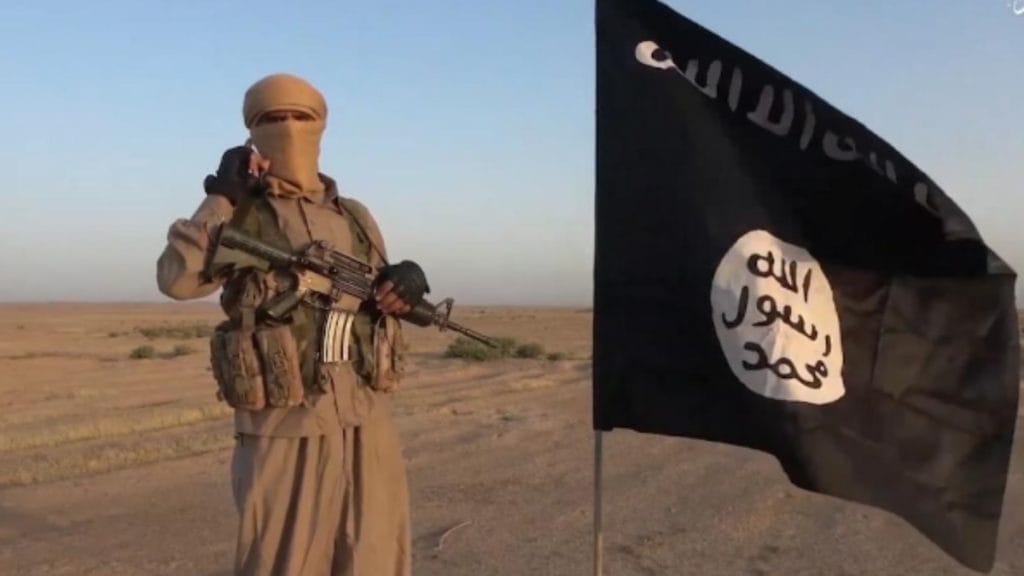
Many of those Sunnis would join ISIS, first appearing in 2004. A 2007 American troop surge would temporarily cause ISIS, along with many other terrorist groups, to fade from view. However, the withdrawal of American troops in 2011 and the continued discrimination and killings of Sunni Arabs caused a surge of new recruits and allowed the group to return to prominence.
Eventually, ISIS became large enough to begin taking territory in Iraq and Syria, destroying infrastructure and killing thousands. This culminated with the conquest of Mosul and Raqqa, followed by a proclamation establishing a caliphate in 2014. ISIS’s brutality swiftly drew the West’s attention, which then began to aid Iraq in its war against ISIS. Iraq, backed by an international coalition led by the United States, began retaking land from ISIS. ISIS lost 95% of its territory by 2017; leaving ISIS as a shadow of its former self. ISIS remains a physical proto-state even after the Prime Minister of Iraq declared victory in December of 2017. ISIS’ claims of territory in Syria ended after the capture of Baghouz in 2019.
As ISIS lost territory and pulled back, they adopted a “scorched earth” policy, destroying critical infrastructure across Iraq. The conflict with ISIS reduced agricultural production by 40%. ISIS displacing Iraqis, looting agricultural surpluses, and destroying agricultural land caused the drastic reduction of agricultural production.
Here are some examples of how badly ISIS destroyed vital infrastructure critical to the survival of local civilians:
Agriculture
Between 30% and 80% of the land, from varying provinces, devoted to agriculture was ruined, with destroyed greenhouses, poisoning of wells and irrigation structures, and the burning of crops. Farming equipment was stolen, with thousands of tractors, harvesters, and other farming machinery taken by ISIS. The remaining infrastructure was militarized; water irrigation pipes were used as IEDs, and food storage structures were used as watch towers.
Water
ISIS’s awareness of the importance of water infrastructure led it to capture multiple water systems, such as canals and dams. This abrupt seizure of critical water systems led to the gradual degradation of water-related infrastructure due to a lack of maintenance and repair, causing a vast reduction in water production across Iraq. This led to a deterioration of water quality, a breakout of hepatitis, and household water access falling to 40%-60% across multiple governorates.
Energy
Finally, Iraq’s energy infrastructure was heavily damaged by the war with ISIS. In 2018, the World Bank’s assessment of 9 governorates noted that most power systems are either partly or not functioning, with nine major cities completely unpowered.
The overwhelming majority of power plants (17 out of 17), distribution substations (92 out of 115), transmission substations (43 out of 49), and power generating substations (6 out of 8) are either heavily damaged or completely destroyed. Massive construction projects and foreign aid are necessary to repair and rebuild the infrastructure that ISIS has destroyed or damaged.

The Current Situation
While ISIS, as a proto-state, has been defeated, the effects of ISIS can still be felt throughout Iraqi society. By the end of the conflict between ISIS and Iraq in 2018, estimates state ISIS had inflicted $45.7 billion in damages across multiple sectors in Iraq.
Estimates also state Iraq requires $88.2 billion to fully restore over the long term. ISIS-planted explosives make it harder for Iraqis to return to and rebuild their land and infrastructure, requiring intervention from the government and international forces to clear.
Water
Due to damage and neglect, water infrastructure has been insufficient to meet local needs. An estimated 30%-40% of water is lost to leaks and illegal access. Besides inadequate infrastructure, a combination of droughts and upstream dams in Iran and Turkey have drastically reduced available surface water.
The available surface water is contaminated with oil, medical waste, heavy metals, wastewater, and exponentially increasing salinity. This has led to extremely low levels of available water, with 3 out of 5 children having no access to safe water. Furthermore, the available unclean water has led to an increased incidence of disease and hospitalization; in 2018, almost 120,000 people were hospitalized in Basrah due to such contaminated water.
Energy
Power infrastructure is insufficient to meet the current needs and is incredibly expensive to produce. Iraq’s power infrastructure suffers from a lack of maintenance, suboptimal fuel, and turbine overheating due to a lack of cooling facilities.
Because of these reasons, Iraq produces far less power than it theoretically should; the nameplate capacity, or full, sustained energy production, of all facilities in 2021 reached 35.9 gigawatts, yet the amount of energy generated in 2021 only reached 21.1 gigawatts. This has led to the energy deficit widening from 3.3 gigawatts in 2003 to 10.7 gigawatts in 2021, and many people lack sufficient access to power.
The lack of access to power and water has led to domestic instability and disillusionment that can lead to people joining extremist groups. The lack of water was one of the causes that contributed to the 2019 protests in Iraq, and failure to fix these issues can and has led to mass violence; the 2019 protests had a violent response that caused an estimated 20,000 injuries and 600 deaths.
The concerns about violence are enhanced by the fact that ISIS still threatens communities and infrastructure within Iraq. ISIS terrorist attacks within Iraq have been declining over the past few years, with ISIS attack claims within Syria and Iraq declining from a high of nearly 1500 attacks to its current nadir of less than 300. However, ISIS continues to operate in a decentralized manner across Syria and Iraq, using feelings of marginalization, anger, and bitterness to recruit new fighters.
Many southern provinces have yet to rebuild their wartorn, crumbling infrastructure. Additionally, families that are perceived, rightly or wrongly, as affiliated with ISIS have been marginalized and displaced. Both of these factors could recreate the same conditions that allowed ISIS to surge in 2014, namely disillusionment with the government and discrimination. Considering the extensive damage that ISIS has inflicted on infrastructure, the concern for an ISIS resurgence in Iraq is warranted.
Analysis
ISIS Resurgence is Possible
The conditions that allowed ISIS to grow into infamy are still present in Iraq, making a comeback possible.
Considering that many of the border provinces have yet to recover from the war on ISIS, and the fact that the last US troop withdrawal was one of the causes of ISIS’s surge to infamy back in 2013 and 2014, an ISIS resurgence is a real if improbable concern.
ISIS’s usual actions in victory and defeat cause tons of damage to Iraq’s already shoddy infrastructure. Its constant terrorist attacks make the building and improvement of water and power infrastructure much more hazardous and expensive.
Solutions
Reconstruction of Infrastructure
Sectarian tensions in Iraq have intensified due to damaged infrastructure vital to the survival of thousands. Restoring water infrastructure would require the repair and building of dams, canals, and irrigation pumping stations. Water purification systems would need to be constructed, and pollution would need to be cleaned to ensure that clean water is sustainable.
Increasing electricity generation and provision necessitates reconstructing and restoring power plants, distribution substations, transmission substations, and power-generating substations. Additionally, Iraq’s natural gas would need to be used more extensively to ensure that enough electricity is generated.
Thank you for reading and being part of the GC2S2 community! Stay connected with us and be the first to know about our latest initiatives by following us on Instagram, Twitter, and Facebook. Join us in our mission to make a difference and create lasting change; together, we can create a better future for everyone!
Bibliography
“Timeline: the Rise, Spread, and Fall of the Islamic State,” Wilson Center, 28 Oct 2019 https://www.wilsoncenter.org/article/timeline-the-rise-spread-and-fall-the-islamic-state
“Iraq: UPR Submission March 2014,” Human Rights Watch, 10 Mar 2014, https://www.hrw.org/news/2014/03/10/iraq-upr-submission-march-2014
“Iraq – Reconstruction and Investment : Volume Two – Damage and Needs Assessment of Affected Governorates (English),” World Bank, 20 Feb 2018, https://documents.worldbank.org/en/publication/documents-reports/documentdetail/600181520000498420/iraq-reconstruction-and-investment-volume-two-damage-and-needs-assessment-of-affected-governorates
“U.S.-Funded Clearance of Deadly ISIS Explosives Enables Iraqi Minorities to Rebuild their Communities Safely,” Medium, 29 Oct 2018, https://medium.com/statedept/u-s-funded-clearance-of-deadly-isis-explosives-enables-iraqi-minorities-to-rebuild-their-b6b7fbb060b1
“Helping to Restore Water Infrastructure to Iraqi Town Liberated from ISIS,” ReliefWeb, 26 Sep 2017, https://reliefweb.int/report/iraq/helping-restore-water-infrastructure-iraqi-town-liberated-isis
“The Impact of ISIS on Iraq’s Agricultural Sector,” ReliefWeb, 15 Dec 2016, https://reliefweb.int/report/iraq/impact-isis-iraq-s-agricultural-sector
“ISIS as an Actor Controlling Water Resources in Syria and Iraq,” İbrahIm Mazlum, Jan 2018, https://www.researchgate.net/publication/321440458_ISIS_as_an_Actor_Controlling_Water_Resources_in_Syria_and_Iraq
“Infrastructure under pressure: Water management and state-making in southern Iraq,” Michael Mason, Jun 2022, https://www.sciencedirect.com/science/article/pii/S0016718522000756
“Troubled Waters: Documenting Pollution of Iraq’s Shatt Al-Arab River,” bellingcat, 10 Nov 2020, https://www.bellingcat.com/news/mena/2020/11/10/troubled-waters-documenting-pollution-of-iraqs-shatt-al-arab-river/
“The Fiscal Cost of Iraq’s Electricity Sector and Potential Gains from Reform,” IMF, 3 Feb 2023 https://www.elibrary.imf.org/view/journals/002/2023/076/article-A002-en.xml#A002fn2
“Running Dry: water scarcity threatens lives and development in Iraq,” UNICEF, 29 Aug. 2021, https://www.unicef.org/iraq/press-releases/running-dry-water-scarcity-threatens-lives-and-development-iraq
“Water Scarcity and Environmental Peacebuilding: A Lens on Southern Iraq,” ReliefWeb, 18 May 2023, https://reliefweb.int/report/iraq/water-scarcity-and-environmental-peacebuilding-lens-southern-iraq
“Affiliated with ISIS: Challenges for the return and reintegration of women and children,” ReliefWeb, 11 Nov 2022, https://reliefweb.int/report/iraq/affiliated-isis-challenges-return-and-reintegration-women-and-children-enar
“One Year of the Islamic State Worldwide Activity Map,” Washington Institute, 4 Apr 2024, https://www.washingtoninstitute.org/policy-analysis/one-year-islamic-state-worldwide-activity-map
“Four Years After ISIS, Iraq’s Tal Afar Remains Riven by Communal Divisions,” US Institute of Peace, https://www.usip.org/publications/2021/08/four-years-after-isis-iraqs-tal-afar-remains-riven-communal-divisions
“Iraq and the Problem of Democracy,” 13 Jan 2023, Wilson Center, https://www.wilsoncenter.org/article/iraq-and-problem-democracy “Is Iraq’s sectarian quota system holding the country back?” 21 Mar 2023, Al Jazeera, https://www.aljazeera.com/news/2023/3/21/is-iraqs-sectarian-quota-system-holding-the-country-back