
(BBC) Map of Somalia – Country Profile. Retrieved From https://www.bbc.com/news/world-africa-14094503
Global Conflict & Crisis Strategic Solutions (GC2S2)
Our Mission: To contribute meaningfully in conflict zones and during times of crisis.
About us: GC2S2 is an action-based think tank in Tysons, Virginia, USA, focusing on the Middle East and Africa. We concentrate on long-term strategic solutions to conflicts and crises in 3 ways: research and analysis to identify issues in countries we operate in, providing humanitarian aid through emergency & crisis services, distributing supplies locals need, and capacity building by establishing long-term sustainable solutions.
We are an apolitical organization and do not intervene or involve ourselves with any political entities or organizations.
Purpose: The weekly report aims to bring awareness to critical issues throughout the Middle East and Africa while identifying ways to address these concerns. We use these reports to identify future projects and strategic solutions for the problems raised. The weekly report is meant to be clear, concise, and inform readers while simultaneously providing unbiased perspectives and insights by addressing every issue pragmatically and holistically.
Projects: Currently, GC2S2 is developing two main projects focused on Syria and Lebanon. The Syria aid basket project is designed to provide 3,100 refugees with a monthly supply of essential food and hygiene kits. The Lebanon project is designed around digital literacy and English courses to alleviate rural Lebanon’s lack of educational access.
The Crisis
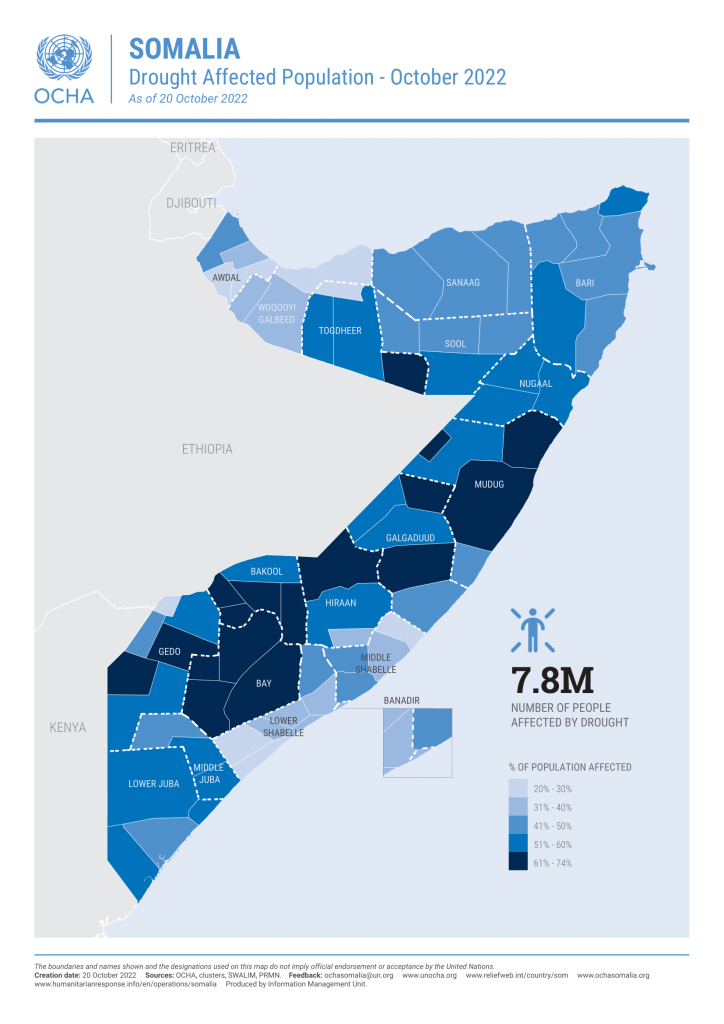
The devastating impact of droughts continues to afflict the nation of Somalia, rendering its people vulnerable to severe humanitarian crises; in 2022 alone, 43,0001 people died due to water access. This East African country has faced droughts for five consecutive harvest seasons. The dry conditions have resulted in widespread water scarcity, depleted livestock, failing crops, and increased food insecurity. From a humanitarian perspective, the ramifications of these recurring dry harvest seasons demand intervention to alleviate the suffering and build resilience in the face of future challenges.
Droughts in Somalia can be linked to it’s geographic location and arid and semi-arid climate, making the nation far more susceptible to climate change. As the availability of clean water diminishes, waterborne diseases and sanitation issues become more prevalent. Nearly 7,800 cases of cholera were reported in 20222. Cholera is a waterborne illness preventable through safe water storage and endemic in Somalia. Waterborne illnesses affect young children particularly, with children under 5 accounting for 23% of the mortality rate3.
Agricultural productivity has declined sharply, which has led to increased food prices, reduced income for farmers, and heightened dependence on external assistance. Roughly 80% of Somalia’s foreign currency earnings are from livestock exports4, and the weather conditions have devastated pastoralists and commercial ranchers.
Water conditions in Somalia profoundly impact the country’s political situation, often exacerbating existing tensions and contributing to social and political instability. Economic conditions fuel competition and conflicts among communities and groups, leading to heightened tensions and violence. Drought-induced displacement also plays a significant role in the political dynamics of Somalia. As communities lose their livelihoods and struggle to meet their basic needs, many are forced to migrate to the capital Mogadishu to survive, straining the resources of the municipal government.
An estimated 3.8 million people are displaced in Somalia5. This influx of displaced people has strained local economies, competition for limited resources and clashes between host communities and newcomers. For example, farmers and ranchers have resorted to wood foraging to sell to charcoal makers. This has lead to violent territorial disputes between landowners and their neighbors, as foragers often trespass over nebulous tribal boundaries and are met with violent ends.
Solutions
GC2S2 can play a crucial role in improving water security for affected communities. Firstly, our organization can identify areas with the most acute water shortages and prioritize interventions accordingly. This can involve collaborating with local experts and stakeholders to assess water availability, quality, and usage patterns. To address water scarcity, GC2S2 can focus on drilling boreholes strategically to tap into underground water reserves. Proper maintenance and regular monitoring of these boreholes are essential to ensure their long-term functionality. Our team can also rehabilitate existing water wells that may have fallen into disrepair, enhancing their capacity to provide clean water to communities.
Proper training and education on water treatment methods, such as boiling or using water purification tablets, can be provided to communities to reduce the risk of waterborne diseases. GC2S2 can introduce water purification systems in areas where water contamination is a concern. This can include distributing water filters, setting up community-based water treatment facilities, and ensuring that locals can maintain new systems.
To maximize water availability, our organization can promote rainwater harvesting techniques. This can involve constructing simple structures to collect rainwater, such as rooftop harvesting systems or small-scale reservoirs. We can provide training and materials to assist communities in implementing these techniques and utilizing harvested rainwater for various purposes, such as cooking, and irrigating small gardens. Rainwater is not feesible for many parts of Somalia, particularly in northern communities. However, rainwater collection is particularly plausible in interior highland regions and sporadically in the South. GC2S2 can conduct awareness campaigns on water conservation practices, emphasizing the importance of using water efficiently during drought. This can include educating communities about practices like using water-saving techniques in agriculture and livestock management.
Establishing water security is the basis for any feasible solution to ensure health and prosperity in Somalia. Once clean water is more readily accessible, food security and improved public health will follow. GC2S2 can help communities establish clean water access, and improve the everyday lives of Somalians.
End Notes
- “Cholera – Somalia.” Accessed June 7, 2023. https://www.who.int/emergencies/disease-outbreak-news/item/2022-DON398_1.
- “How Drought Insurance and Value Chains Can Support Somalia’s Livestock Economy,” October 3, 2022. https://blogs.worldbank.org/africacan/how-drought-insurance-and-value-chains-can-support-somalias-livestock-economy.
- International Organization for Migration. “Displacement in Somalia Reaches Record High 3.8 Million: IOM Deputy Director General Calls for Sustainable Solutions.” Accessed June 10, 2023. https://www.iom.int/news/displacement-somalia-reaches-record-high-38-million-iom-deputy-director-general-calls-sustainable-solutions.
- McVeigh, Tracy. “Drought Caused 43,000 ‘Excess Deaths’ in Somalia Last Year, Half of Them Young Children.” The Guardian, March 21, 2023, sec. Global development. https://www.theguardian.com/global-development/2023/mar/21/drought-caused-43000-excess-deaths-in-somalia-last-year-half-of-them-young-children.
- The Borgen Project. “10 Facts About Sanitation in Somalia,” June 16, 2020. https://borgenproject.org/tag/10-facts-about-sanitation-in-somalia/.