Global Conflict & Crisis Strategic Solutions (GC2S2)
Our Mission: To contribute meaningfully in conflict zones and during times of crisis.
About us: GC2S2 is an action-based think tank in Tysons, Virginia, USA, focusing on the Middle East and Africa. We concentrate on long-term strategic solutions to conflicts and crises in 3 ways: research and analysis to identify issues in countries we operate in, providing humanitarian aid through emergency & crisis services, distributing supplies locals need, and capacity building by establishing long-term sustainable solutions.
We are an apolitical organization and do not intervene or involve ourselves with any political entities or organizations.
Purpose: The weekly report aims to bring awareness to critical issues throughout the Middle East and Africa while identifying ways to address these concerns. We use these reports to identify future projects and strategic solutions for the problems raised. The weekly report is meant to be clear, concise, and inform readers while simultaneously providing unbiased perspectives and insights by addressing every issue pragmatically and holistically.
Projects: Currently, GC2S2 is developing two main projects focused on Syria and Lebanon. The Syria aid basket project is designed to provide 3,100 refugees with a monthly supply of essential food and hygiene kits. The Lebanon project is designed around digital literacy and English courses to alleviate rural Lebanon’s lack of educational access.
Sahrawi Refugees in Tindouf Fact Sheet
| Newly Displaced: From November to December 2020, a reported 4,700 Sahrawi refugees have been newly displaced, leaving their homes in Western Sahara and moving into the Tindouf camps | Number of Camps in Algeria: 5; Awserd, Boujdour, Dakhla, Laayoune, and Smara |
| Food Insecure Population: 30% of the population is food insecure, and 58% is at risk of food insecurity. | Languages: Spanish is the former colonial Spanish language, Arabic and French is spoken in many of the Algerian camps, and Tamazight is spoken by the ethnic Berber population |
| Prevalence of Nutritionally Stunted Children: 28.8%, nearly ⅓ of the child population has impaired growth. | Anemic Population: 50.1% of children and 54.1% of women in child bearing years are anemic. |
| Anemic Population: 50.1% of children and 54.1% of women in childbearing years are anemic. | Prevalence of Malnutrition: 10.7% of Children 6-59 months old suffer from Global Acute Malnutrition. |
| Religions: 99.9% are Sunni Muslims |
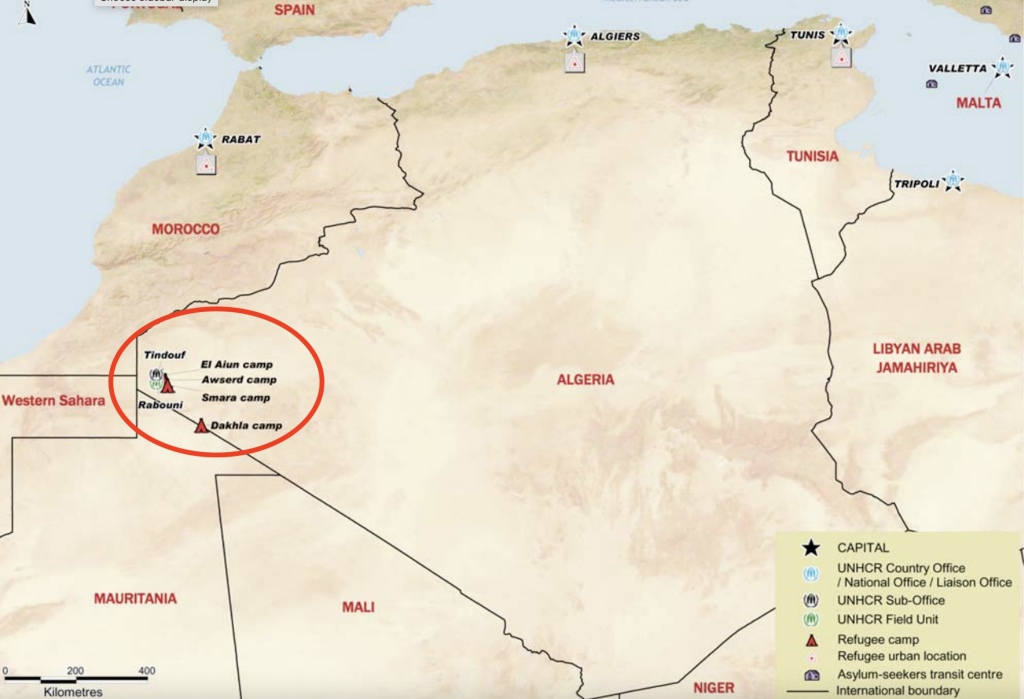
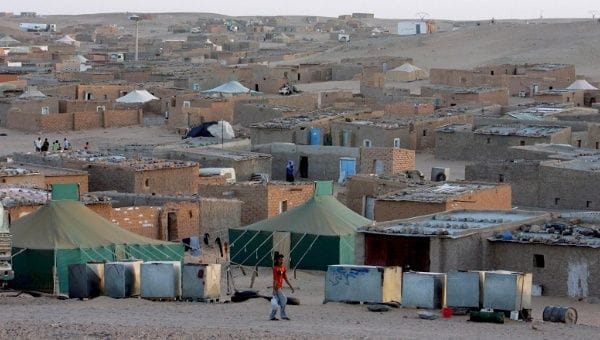
The Sahrawi’s humanitarian crisis has been ongoing for the last 48 years; since Spain’s decolonization of their homeland in Western Sahara and the subsequent expansion of Morocco into the area in 1975. This expansion led to armed conflict between Morocco, Algeria, Mauritania, and the rebel Sahrawi nationalist group, the Polisario Front. The conflict persists today and has pushed thousands of Sahrawi refugees out of their homeland and into the Tindouf province of Algeria located in the Sahara desert. There are over 173,600 Sahrawi currently residing in Tindouf.1 The region’s arid environment and lack of resources leaves the Sahrawis miniscule farming and employment opportunities. Over 80% of the refugees depend on humanitarian aid to meet their daily food intake.2 Recent declines in support has led to massive ration shortages and a food emergency.
https://www.telesurenglish.net/opinion/The-Disasters-Facing-the-Saharawi-Refugees-20151104-0029.htm
International assistance has decreased dramatically in recent years. In the first six months of 2022 international assistance declined by 20%.3 This decline is most likely due to the increase in prices brought on by the economic aftereffects of Covid-19 and the onset of the war in Ukraine. The food rations Sahrawis have relied on for the last 48 years decreased by 75% from 2019 to 2022. As a result, what was once 17 kilograms (kgs) of food per person a month is now 5 kgs; for perspective, this equates to less than half the recommended caloric intake per day.4 Within these rations, Sahrawis mostly receive foods lacking in micro-nutrients such as cereals, sugars, and tubers. Fruits and vegetables are a rarity, with most Sahrawis, on average, receiving enough for less than one day out of the week.5
Many Sahrawis do not know when their next meal is coming. Life-threatening malnutrition and other nutrient-related ailments run rampant in the camps with children and women ages 15-49 years old being the primary victims. Since 2019 the World Food Programme found there has been a drastic increase in the prevalence of Global Acute Malnutrition (GAM) in Sahrawi children ages 6 months – 4 years old, rising from 7.6% to 10.7% in 2022. This increase has brought the GAM threshold up from a medium severity to high; as a result, the prevalence of conditions such as nutritional stunting or impaired growth has also increased, with 28.8% of children being affected in 2022. In addition, the lack of key micronutrients like iron has contributed to a rise in anemia and other nutrient-related ailments. Over 54% of women and 50.1% of children suffer from anemia in 2022; rising from 39% of both groups in 2016.6
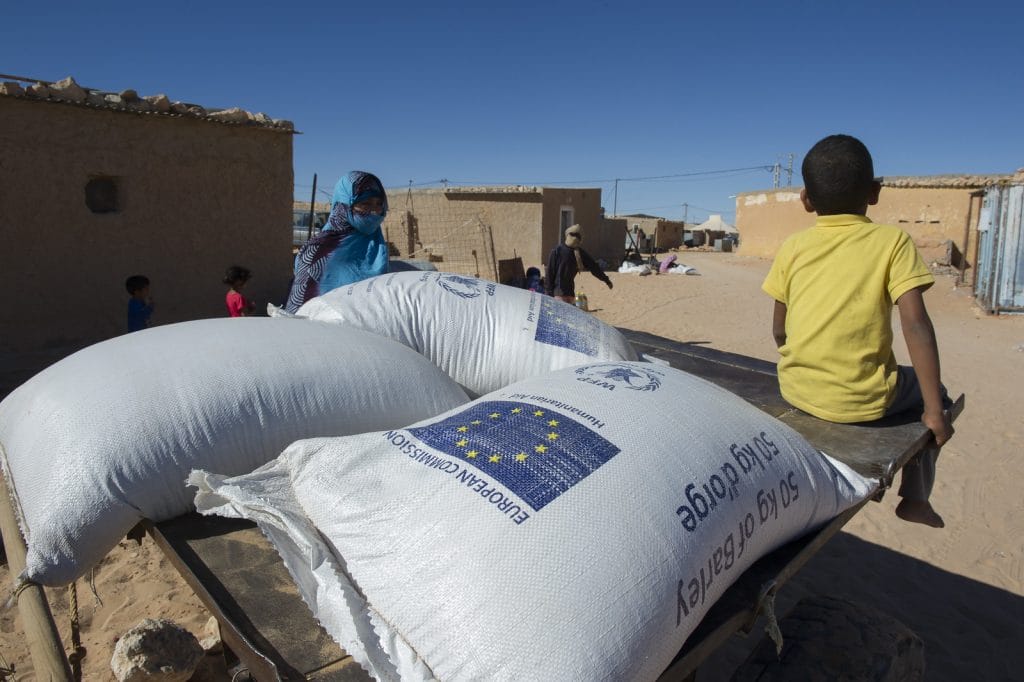
There has been an overall lack of much-needed international support and media coverage, leading to the situation in these camps being considered a forgotten crisis.7 This “forgotten crisis” has affected not only the health of refugees but also their morale. Feelings of desperation and abandonment, which have been present amongst the Sahrawi refugees since their exile, have grown significantly with the decrease in support and associated lack of media coverage. Fueled by this sentiment, some refugees have taken extreme initiatives, turning to a life of radicalization and joining terrorist groups such as the Islamic State in the Greater Sahara (IS-GS). Reports show that Sahrawi youth, in particular, have expressed feelings of stagnation and hopelessness, leading to a higher chance of radicalization due to the current state of the crisis, lack of opportunities, and unknown future.8
Solutions:
Delivering humanitarian aid directly to the Tindouf camps is amongst the top priority initiatives GC2S2 can take. Doing so will aid in alleviating the food insecurity and nutritional-ailments faced by children and women. Food and supplements rich in vitamins and minerals such as iron will have an impact on decreasing the prevalence of anemia and other nutrient-related conditions. However, humanitarian aid is only part of the solution. GC2S2 can start a social media campaign to raise awareness of the crisis and collect donations from the international public. This campaign can possibly mitigate increasing food prices. A significant reason why there is a lack of support is due to the lack of media coverage. Many people do not know about the Sahrawi situation, and as a result, the donor pools are very small. Thus, the public attention GC2S2 brings to the crisis can potentially increase the donor pool and support.
For a more long-term solution, GC2S2 can work to establish capacity-building and sustaining activities within Tindouf. Such activities can include hydroponic farming, which does not require soil or high amounts of water, making it an effective medium for growing crops in arid climates like Tindouf. This technique has already proven invaluable to some Algerian camps, giving Sahrawi farmers the capability to grow barley fodder for their animals.9 GC2S2 can further advance hydroponic farming in the area by delivering equipment and training to refugees, allowing them the opportunity to produce their own food and become less dependent on humanitarian aid in the future.
End Notes:
- “Algeria Sahrawi Refugees: Overview.” ACAPS. Crisis Updates 01/05/2022. https://www.acaps.org/country/algeria/crisis/sahrawi-refugees
- “Algeria Fact Sheet.” European Commission. https://civil-protection-humanitarian-aid.ec.europa.eu/where/africa/algeria_en
- “Malnutrition Emergency in Sahrawi Camps.” Il Comitato Internazionale Per Lo Svilluppo Dei Popoli. (2022). https://developmentofpeoples.org/en/get-informed/latest-from-cisp/news/malnutrition-emergency-in-sahrawi-camps-75-reduction-in-food-rations
- “With Higher Food Prices and Pressing Needs, UN Team in Algeria Calls for Support for Sahrawi Refugees.” UNICEF. (2022) https://www.unicef.org/algeria/en/press-releases/higher-food-prices-and-pressing-needs-un-team-algeria-calls-support-sahrawi-refugees
- “2019 Nutritional Survey Sahrawi Refugee Camps, Tindouf, Algeria.” ACAPs (2019). https://www.acaps.org/sites/acaps/files/key-documents/files/wfp_key_1.pdf
- “WFP Algeria Country Brief March 2023.” World Food Programme. https://docs.wfp.org/api/documents/WFP-0000149318/download/?_ga=2.36635808.1800266981.1685704372-257521796.1685704372
- Algeria Fact Sheet.” European Commission. European Civil Protection and Humanitarian Aid Operations. https://civil-protection-humanitarian-aid.ec.europa.eu/where/africa/algeria_en
- Algeria Sahrawi Refugees: Overview.” ACAPS.
- “Growing Food in the Algerian Desert.” World Food Programme. (2017) https://www.wfp.org/stories/growing-food-algerian-desert